
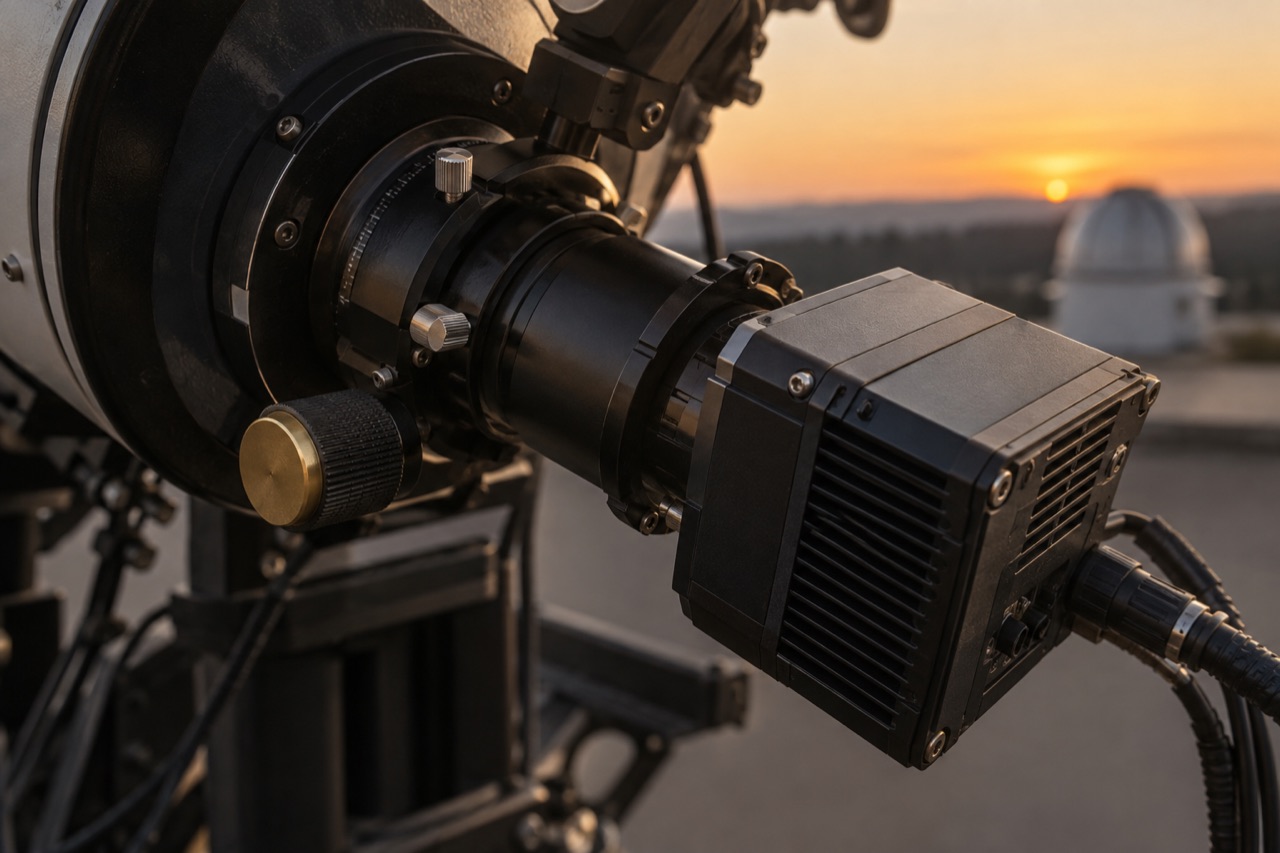
Published September 23, 2026 · Images are illustrative
Telescopes find near-Earth objects by recording points of light against the stars. Early observations may leave an orbit uncertain, so an object can briefly appear on a risk list. Follow-up measurements narrow that uncertainty. The number that matters is not how ominous a headline sounds but whether the calculated impact probability persists as the orbit improves.
NASA says no known asteroid larger than 140 meters has a significant chance of striking Earth in the next century. That is not a claim that every object has been found, or that monitoring can stop. It is the current result of sustained search and orbit analysis. Small objects reach the atmosphere much more often and usually cause little or no damage.
The warning system includes discovery, orbit calculation, independent observations, and, if needed, planning for a response. NASA’s DART test showed that changing an asteroid’s path is a subject of real engineering, not merely movie fiction. But readiness should not be mistaken for a current emergency.
The next time an alarming asteroid name trends, look for the updated orbit and NASA’s planetary-defense explanation. Uncertainty is a reason to keep measuring, not to announce an impact.
Check the signal
Conditions and guidance can change after publication. Consult these primary sources for current information:
The signal continues
These reports are part of the Indrid Coald world. Listen to the music, watch the transmissions, or explore the art behind it.